


Most retirees who ask how to choose an online business as a retiree start by searching for a list of ideas: blogging, freelancing, selling crafts, tutoring. Those lists are long, and nearly every item on them sounds plausible and equally unfamiliar. A better starting point is a list you can write yourself in an afternoon, made of things you already know how to do.
This article walks you through making that list, turning it into a few candidate projects, and picking one small enough to try in four weeks. You need a notebook and some quiet time. You do not need a computer for the first half.
Why the best first project is usually hiding in your own history
People who are new to earning online tend to assume the work is technical: building websites, running ads, learning software. Some of it is. But the thing a customer pays for is almost always a skill, a piece of knowledge, or a result, and the internet is only the way it gets delivered.
You already have decades of those. You have spent years doing tasks properly, fixing problems, explaining things to new colleagues, and being the person others turned to. Some of that is specific enough that a stranger would pay for a clear version of it, such as a template, a short guide, a one-hour call, or a done-for-you service.
Starting from your own history has practical advantages over starting from a trending idea:
- You already know the subject, so you spend your first weeks setting up the project instead of studying it.
- You can judge quality yourself. You will know when your own work is good.
- You are more likely to keep going, because you are working with material you care about.
- You can describe what you offer in plain words, which is most of what a small online project needs at the beginning.
Many retirees doubt they have anything to offer online. That doubt is usually a measuring problem. Skills you have used for thirty years feel ordinary because they are familiar to you, and they are not ordinary to someone who has never done them. The exercises below are meant to surface them.
Walk back through your career: the tasks people always handed to you
Take a sheet of paper and draw a line down the middle. On the left, write each job or role you held, even short ones. On the right, write the tasks that kept landing on your desk, especially the ones nobody else wanted or knew how to do.

Job titles describe a position. Tasks describe what you could do. Two people with the same title can have very different strengths, so spend your time on the tasks. These questions help jog your memory:
- What did new colleagues ask you to show them?
- What did your manager hand you when something was a mess?
- What did you do faster or more accurately than the people around you?
- What forms, reports, schedules, or procedures did you write or improve?
- What did you explain to customers, patients, students, or clients that they found confusing?
- Which problems did people phone you about after you had moved on to another role?
Write down everything, including tasks that seem too small. Reconciling accounts, writing clear emails, training apprentices, planning shift rotations, calming upset customers, reading engineering drawings, organizing a filing system and drafting grant applications are all skills that other people struggle with.
Next to each task, mark whether you did it alone or with others, and whether you liked it. Some skills you were good at will be work you never want to do again. Mark those now, because they will matter when you narrow the list.
A career in a field with no obvious online angle still produces useful material. A retired nurse knows how to explain a discharge instruction so an anxious relative understands it. A retired electrician knows which questions to ask before quoting a job. Teaching what you know, in writing or in conversation, is one of the more direct ways to turn experience into something a reader can use.
Look past work: hobbies, household skills and things friends ask your advice on
Your career is only part of what you know. Start a second page and cover the rest of your life.

Hobbies. List anything you have done regularly for years: gardening, woodworking, sewing, fishing, genealogy, photography, baking, birdwatching, restoring furniture, playing an instrument. Note how long you have done each and what you have worked out through trial and error. Practical lessons you learned the hard way are worth more to a beginner than general advice.
Household skills. Think about what you manage well at home. Maybe you keep a tight household budget, plan trips efficiently, cook for a crowd, maintain a car, care for an elderly relative, or navigate paperwork and appointments. These are real skills and many people look for help with them.
What friends and family ask you. This is often the most revealing list. Write down every kind of question people bring to you:
- Which phone or laptop should I buy?
- Can you look over this letter before I send it?
- How do I get this garden bed to stop flooding?
- Can you help me plan this trip?
- What do I do about this form?
When several people independently ask you the same kind of question, they are telling you what you are known for. You may not see it yourself because you have never had to charge for it.
Look also at the questions you answer with some enthusiasm. If a friend asks about sourdough and you find yourself talking for twenty minutes, that is useful information about what you could sustain.
When you finish both pages, you should have somewhere between fifteen and forty items. Do not trim anything yet.
Turn your list into three honest project candidates
Now look for clusters. Read through both pages and circle items that connect, such as a career task and a hobby that overlap, or a skill that appears in several places. Three or four clusters usually emerge.
For each cluster, write one sentence in this form: “I could help [a specific kind of person] do [a specific thing].” The more specific it is, the more useful it is. “Help people with money” is too wide to act on. “Help newly retired couples work out a monthly budget on a fixed income” is something you could build a guide, a spreadsheet, or a short consultation around.

Then decide what form each candidate would take. Common small formats include:
- Written guides or a small website that answer the questions people keep asking you. Over time this can earn through affiliate commissions on tools or training you actually use, but only if you recommend things you have good reason to trust.
- A digital product, such as a checklist, template, or short ebook.
- One-to-one help, such as tutoring, coaching, editing, bookkeeping, or consulting, delivered by video call or email.
- A service done for others, such as proofreading, scheduling, transcription, or research.
Keep your three candidates honest. Each should come from something you have done, not something you hope to learn. If a candidate would require months of study before you could offer anything, set it aside for now. You can come back to it once you have a project running.
A short example of the format: a retired bookkeeper might write down three candidates. One is a plain-language guide to keeping records for people with a small side income. Another is a monthly review service for a few small local businesses. The third is a website about the household budgeting methods she has used for decades. These are illustrations of how to word candidates, and yours will look different.
Test each idea with four plain questions
Each candidate gets the same four questions. Write short answers, and be frank with yourself.
1. Time. How many hours a week can you give this without it crowding out the rest of your life? Estimate the setup hours and the weekly hours separately. A project that needs fifteen hours a week from the start may suit someone who wants a second occupation, and be a poor fit for someone who wants a few mornings of work.
2. Cost. What would you need to spend before you earn anything? For many of these projects the honest answer for the first month is nothing, or very little: a notebook, an email address, perhaps a free account on a site. If a candidate seems to require a large purchase before you have spoken to a single potential customer, mark it as higher risk.
3. Patience. How long are you prepared to work before seeing any result? Websites and written content often take months before they attract readers. One-to-one services can bring a first customer sooner but require you to find people yourself. Neither is faster in every case, so decide which kind of waiting you tolerate better.
4. Enjoyment. Would you still want to do this on a gray Tuesday when nobody has responded? Enjoyment is not a luxury here. A project you like is one you will keep working on through the slow early weeks, and most of the difference between projects that continue and those that stall comes down to that.
Score each candidate from one to five on each question, then add them up. The totals are a rough guide, and your gut reaction counts too. If a candidate scores well but you feel a sinking sensation when you imagine doing it, take that seriously. If one scores lower but you keep thinking about it, check which question dragged it down, and whether the problem can be fixed by making the project smaller.
Pick one small project and set a first four-week goal
Choose the candidate with the best combination of scores and appeal, and shrink it. The aim of a first project is to find out whether anyone wants what you offer, and a small version answers that question faster and at less cost than a large one.
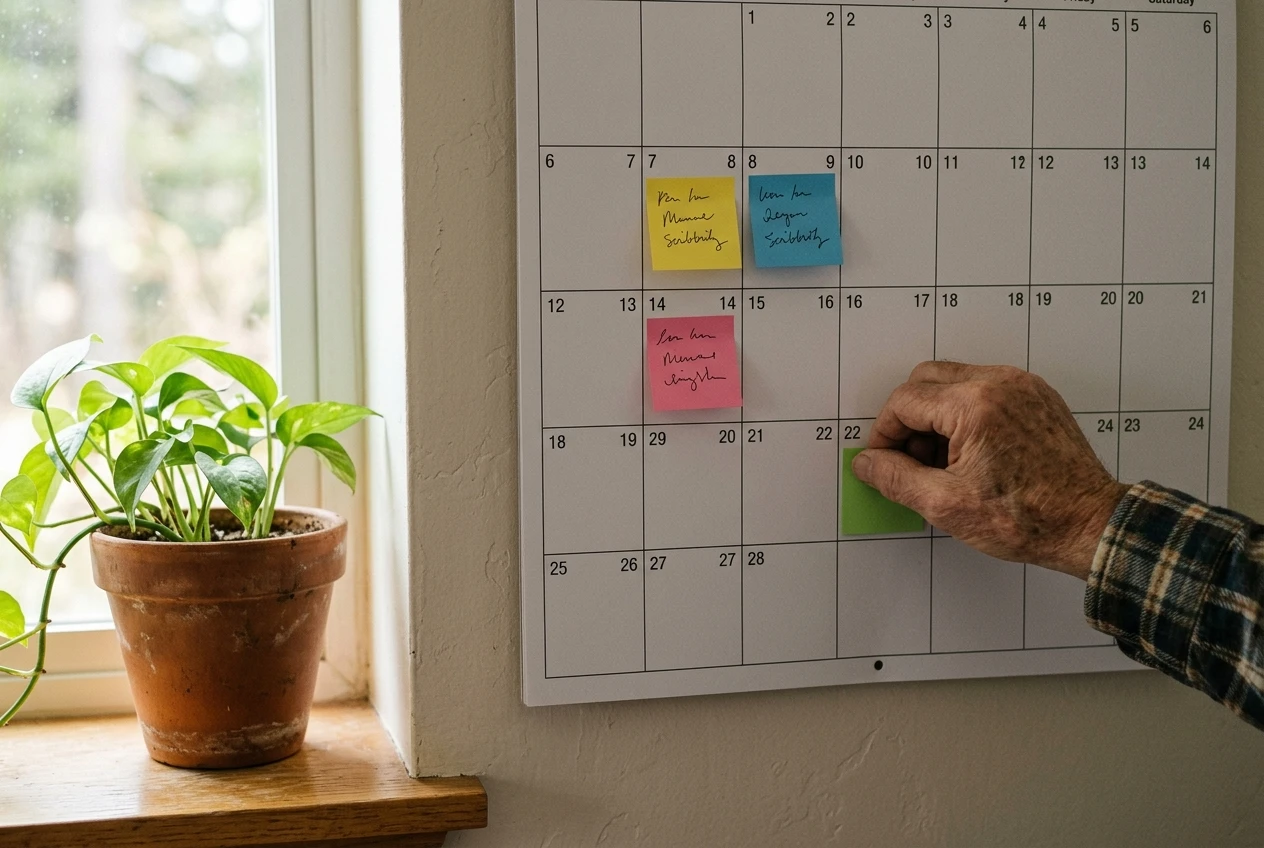
Then set a four-week goal that does not depend on income. Earnings in the first month are possible but are not something you can plan around, so set a goal you control. Here is one way to divide the month:
- Week one: Write a one-paragraph description of who you help and with what. Read it aloud to someone you trust and ask whether they understand it.
- Week two: Make one small sample of your work, such as a single guide page, a sample template, or a worked example.
- Week three: Show it to five people who fit the audience you described. Ask what is useful, what is confusing, and what they would want next.
- Week four: Make changes based on what you heard, then make your first real offer, even if it is free or heavily discounted, to one person.
A reasonable goal at the end of the month is “one person who is not a relative has used what I made and told me what they thought.” That is concrete, achievable, and tells you more than any amount of planning would.
Spend no money in these four weeks unless you have a specific reason. Free tools are enough to write, make a simple document, and send an email. If you later choose paid tools or training, pick ones you have found a real need for.
What to do if nothing on your list feels right yet
Sometimes the lists come out thin, or every candidate scores poorly. That is useful information and a normal result for a first pass. A few things to try:
- Ask other people. Send a short message to five friends, former colleagues, or relatives: “What do you think I am good at that I might not notice?” The answers often include things you would never have written down.
- Go back through old records. Look at performance reviews, thank-you notes, certificates, or projects you kept. They show what other people valued at the time.
- Lower the stakes. If none of your ideas seems worth building into a project, pick the one that is cheapest to try and treat it as practice. Writing a single helpful page or helping one person for free costs little and teaches you how the process works.
- Revisit the enjoyment question. If nothing on the list appeals, you may be looking at skills you are tired of instead of things you want to do. Look again at hobbies and curiosity, and consider which of those you could teach as a beginner-friendly guide after a modest amount of extra reading.
- Give it a week. Leave the lists in a drawer and add to them as things occur to you. Questions people ask over the next few days may show you a pattern you missed.
Working out how to choose an online business as a retiree is slower than picking an idea from a list, and it leads to a project that fits you. Take your time with it.
Your next step
Before you do anything else, write down your three candidate projects, each in one plain sentence, with your scores for time, cost, patience, and enjoyment beside them. Then read our guide on starting without risking your savings before you spend anything on tools, courses, or a website.